This research is a joint publication of the Bangladesh Working Group on Ecology and Development (BWGED), in association with Ethical Trading Initiative (ETI) Bangladesh, Bangladesh Environmental Lawyers Association (BELA), Bangladesh Institute of Labour Studies (BILS), Coastal Livelihood and Environmental Action Network (CLEAN), Lawyers for Energy, Environment and Development (LEED), Manusher Jonno Foundation (MJF) and ReGlobal.
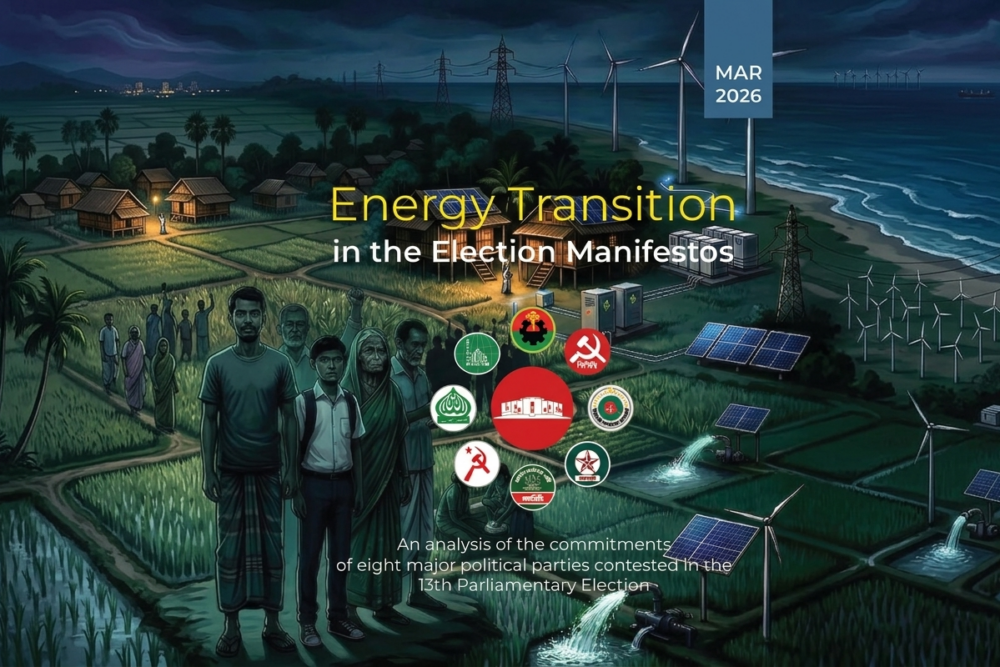
The 13th Democratic National Elections in 2026 marked a pivotal moment for Bangladesh, compelling major political parties to articulate comprehensive visions for the nation’s energy future amid severe debt and rising energy import dependency. This study rigorously analyses the manifestos of eight major political parties, such as Bangladesh Samajtantrik Dal (BASOD), Bangladesh Jamaat-e-Islami (BJI), Bangladesh Khelafat Majlis (BKM), Bangladesh Nationalist Party (BNP), Communist Party of Bangladesh (CPB), Islami Andolan Bangladesh (IAB), Jatiya Samajtantrik Dal (JSD-Rab) and National Citizen Party (NCP).
Pivoting from the 13-point Citizens’ Manifesto developed earlier in November 2025 (for more information, please click here), the research used both qualitative and quantitative comparative methods to assess political commitments and review election manifesto content against the need for a just and green transition. The analysis finds that while political parties are increasingly recognising the importance of renewable energy transition and grid modernisation, major gaps remain, especially around phasing out fossil fuel infrastructure and ensuring fair, accessible financing for community-led clean energy initiatives.