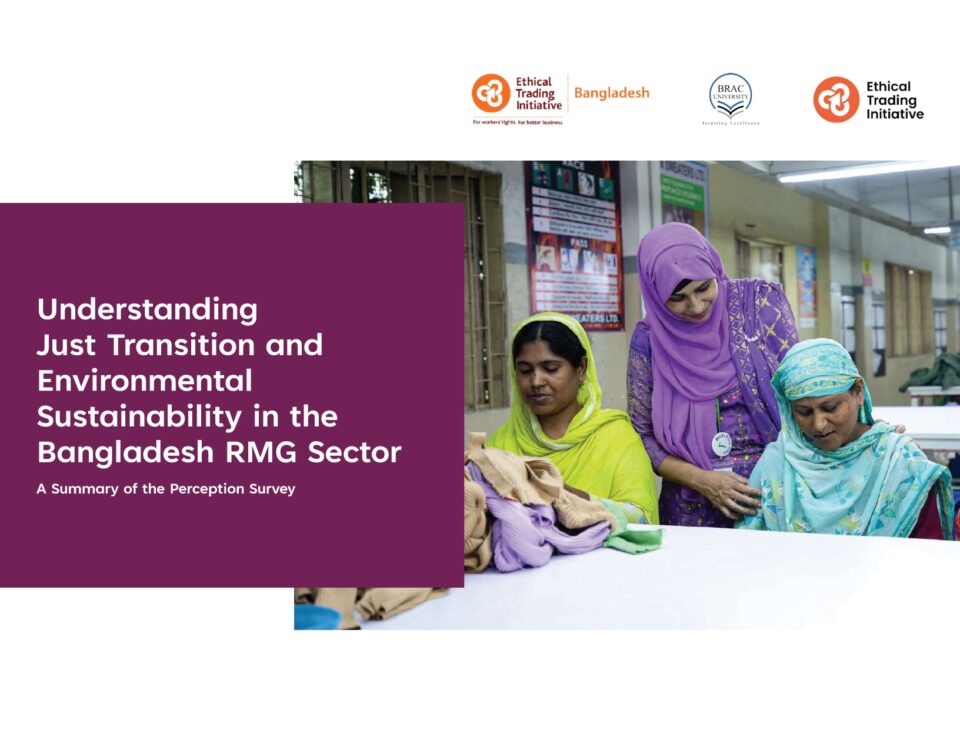
This research is a joint initiative of Ethical Trading Initiative Bangladesh and BRAC University.
Bangladesh’s ready-made garment (RMG) industry is central to the country’s economy and employment, directly contributing to over 80% of our foreign export earnings and simultaneously employing around 4 million workers. At the same time, the broader RMG–textile value chain is among Bangladesh’s most emissions-intensive industrial sectors, contributing significantly to national industrial greenhouse gas emissions. Adverse climate change impacts are already disrupting production, supply chains, and working conditions. The workers who are the lifeblood of this industry are also among those most directly affected by these changes, through heat stress, workplace risks, and growing livelihood insecurity. Combined with rising global expectations around environmental sustainability, this makes an inclusive green energy transition, increasingly critical to the sector’s long-term resilience and competitiveness.
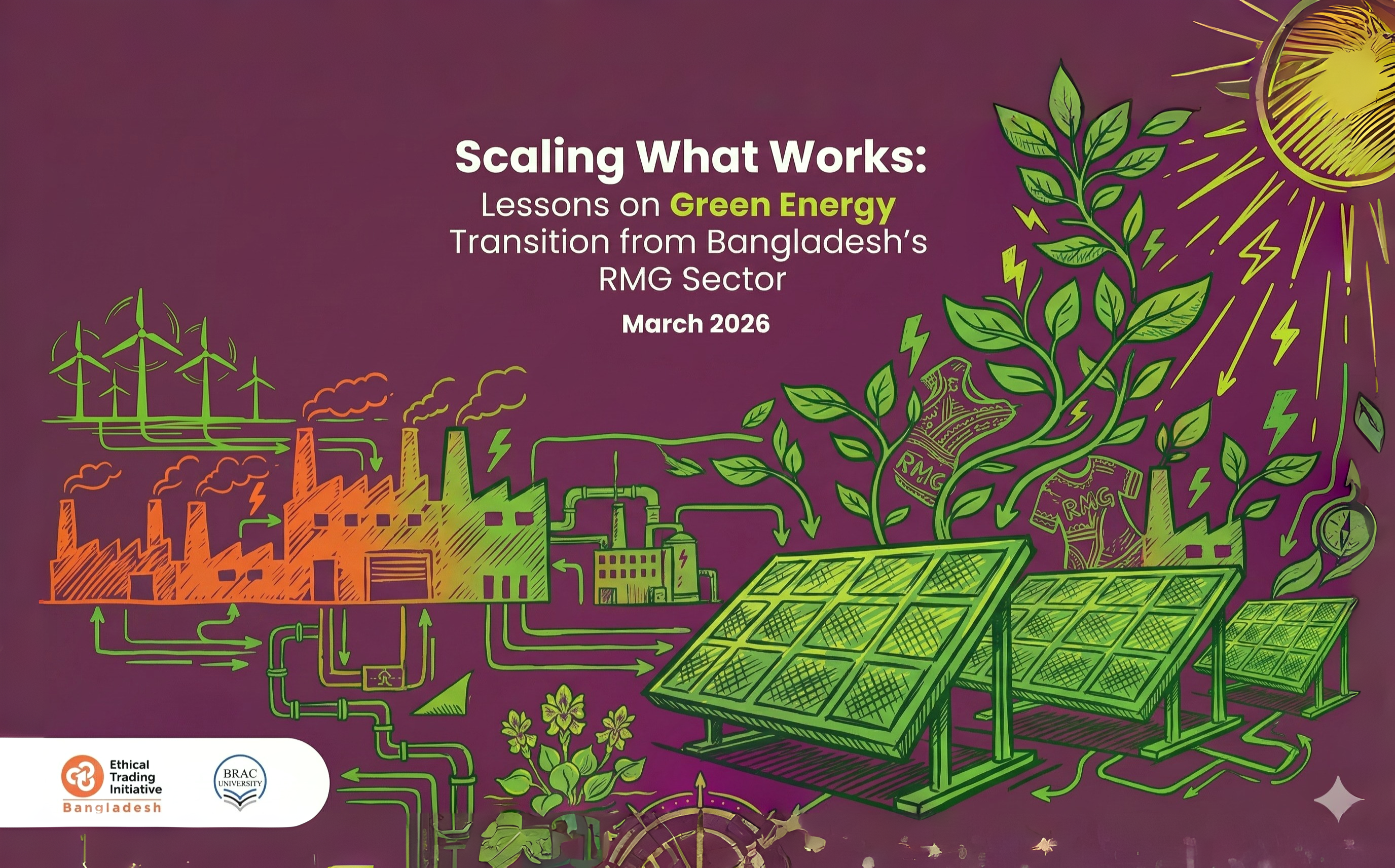
This publication responds to these combined pressures. Developed in response to repeated stakeholder calls for more practical evidence from within the sector, it is our first attempt to document best practices on green energy transition in Bangladesh’s RMG industry. Through selected cases, the research highlights emerging models, practical experiences, and examples that show how a greener transition can also be a business case.
Primary data collection was conducted between December 2024 and July 2025.