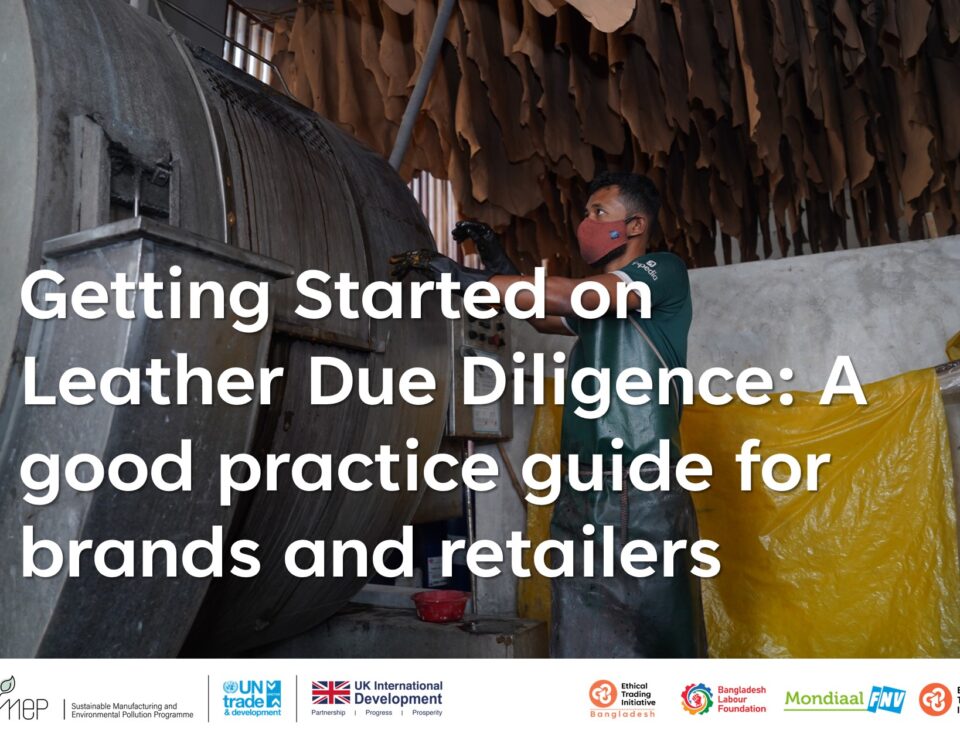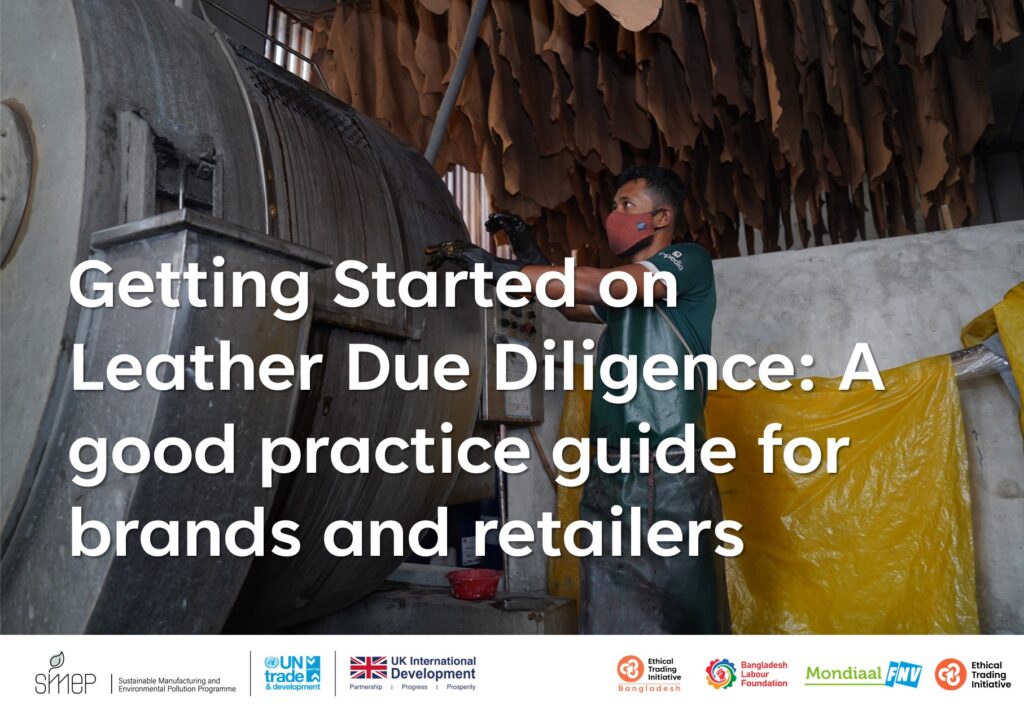
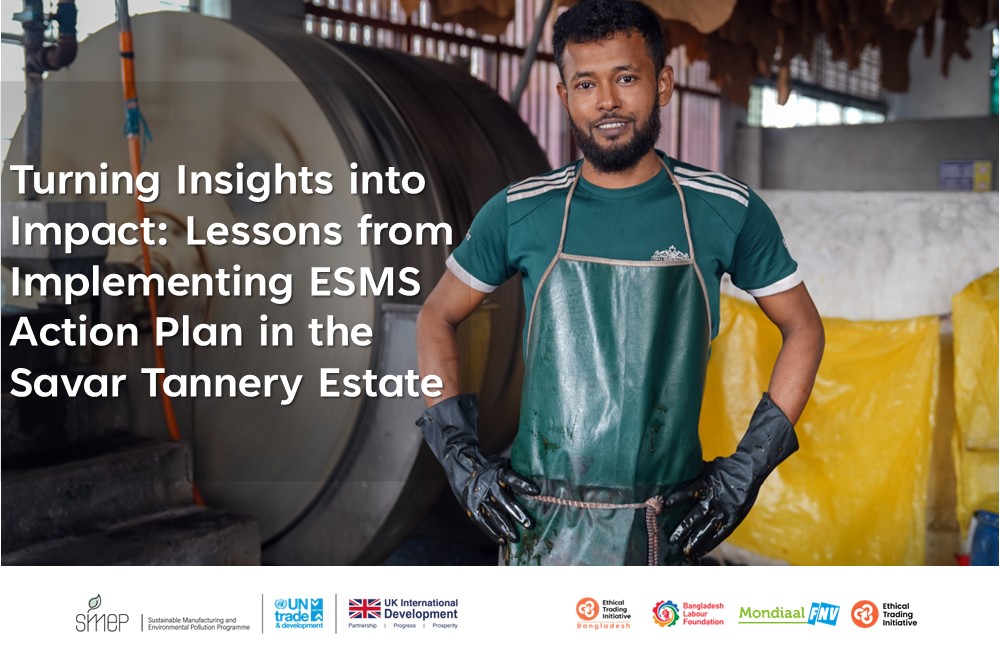
For decades, the promise of Bangladesh’s leather sector has outpaced its practice. Behind the export figures and job numbers lies a harder truth: many of the factories in the Savar Tannery Estate still fall short of the basic environmental safeguards and workplace protections their workers deserve, and until that changes, the sector’s global ambitions will remain out of reach. Closing this gap will take more than infrastructure or inspection, it will require factories, workers, and management to build compliance into daily practice, together.
This learning document presents findings from the ESMS action plan process, developed and implemented under the Improving Environmental and Social Conditions in the Savar Tannery Estate project (2024–2026). The initiative has been carried out by the Ethical Trading Initiative (ETI), ETI Bangladesh, the Bangladesh Labour Foundation (BLF), and Mondiaal FNV, in partnership with the Tannery Workers’ Union (TWU), with support from the UK government-funded Sustainable Manufacturing and Environmental Pollution (SMEP) Programme.