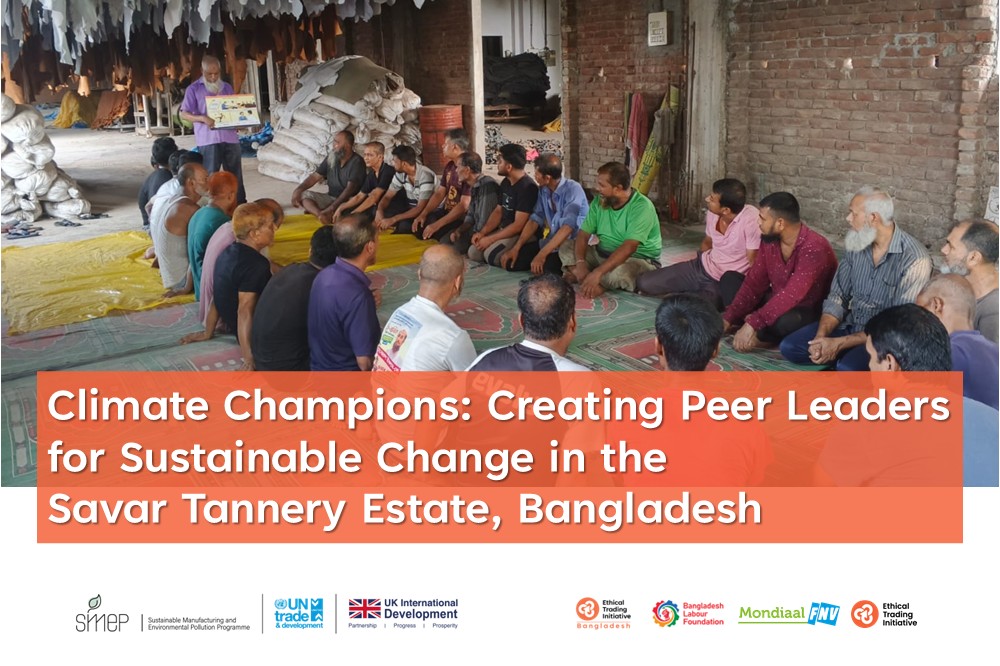
This case study explores a factory-based, peer-led capacity-building initiative implemented by a multi-stakeholder consortium comprising the Ethical Trading Initiative (ETI) UK, ETI Bangladesh, the Bangladesh Labour Foundation (BLF), and Mondiaal FNV under the SMEP Programme to address critical gaps in workplace safety and environmental awareness. Moving away from traditional, external classroom training, the project trained 138 factory-based resource persons known as “Climate Champions” and equipped them with simple, visual pictorial flipcharts to deliver flexible, short awareness sessions directly on the factory floor during work breaks or power outages. This model successfully reached 947 workers across 33 factories. Despite facing operational challenges like high workforce turnover, production pressures, and occasional management resistance, the initiative established a sustainable model of peer accountability, where champions actively mentor colleagues to ensure that vital health, safety, and compliance knowledge remains deeply embedded within the factories.