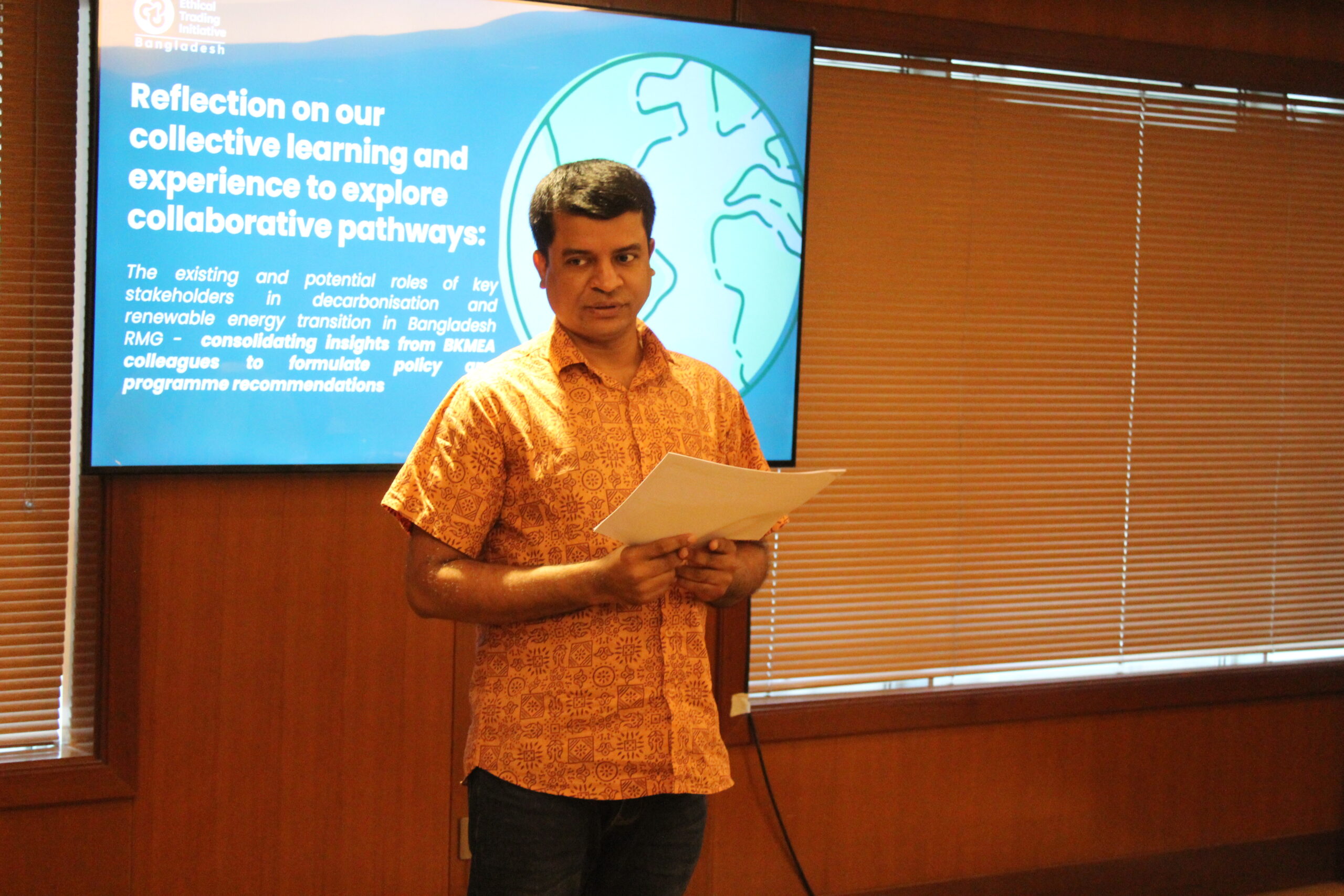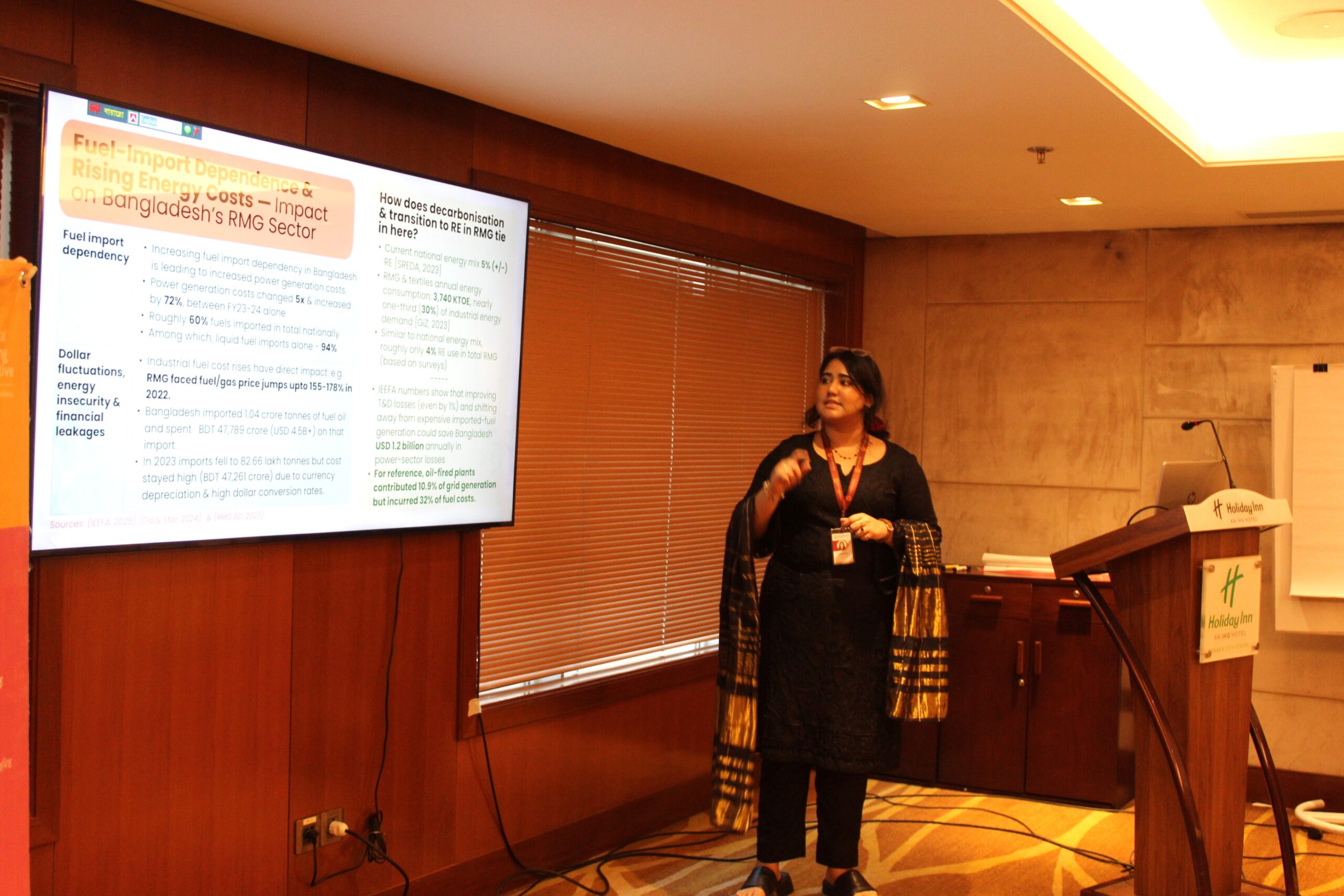
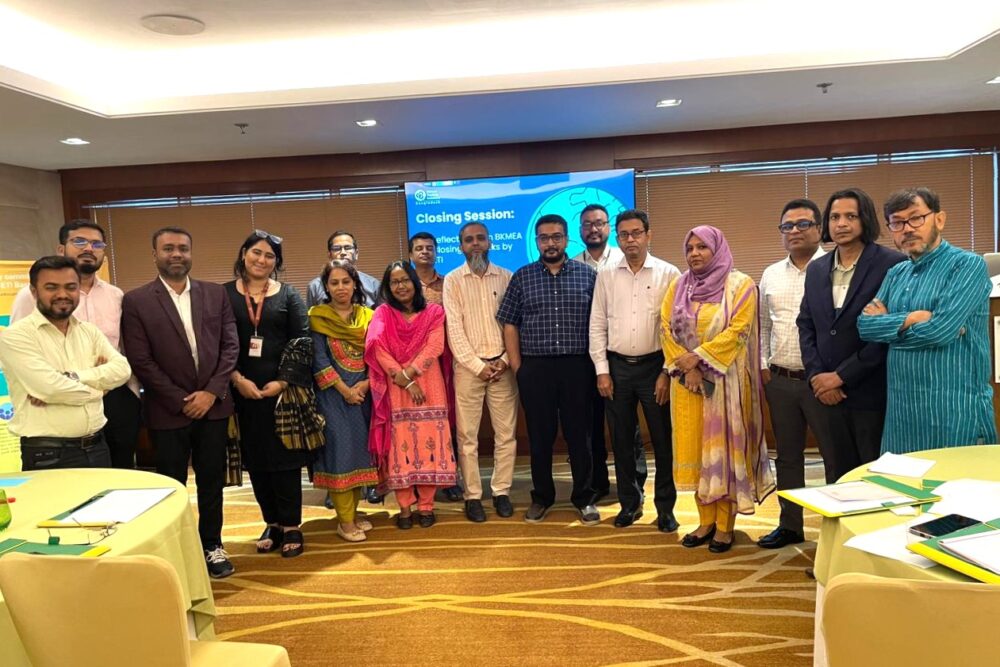
On 8 November 2025, ETI Bangladesh hosted a consultation workshop with the Bangladesh Knitwear Manufacturers and Exporters Association (BKMEA), titled, “Exploring collaborative pathways towards decarbonisation and a renewable energy transition in Bangladesh RMG.” The session brought together representatives from the BKMEA’s director & secretariat level.
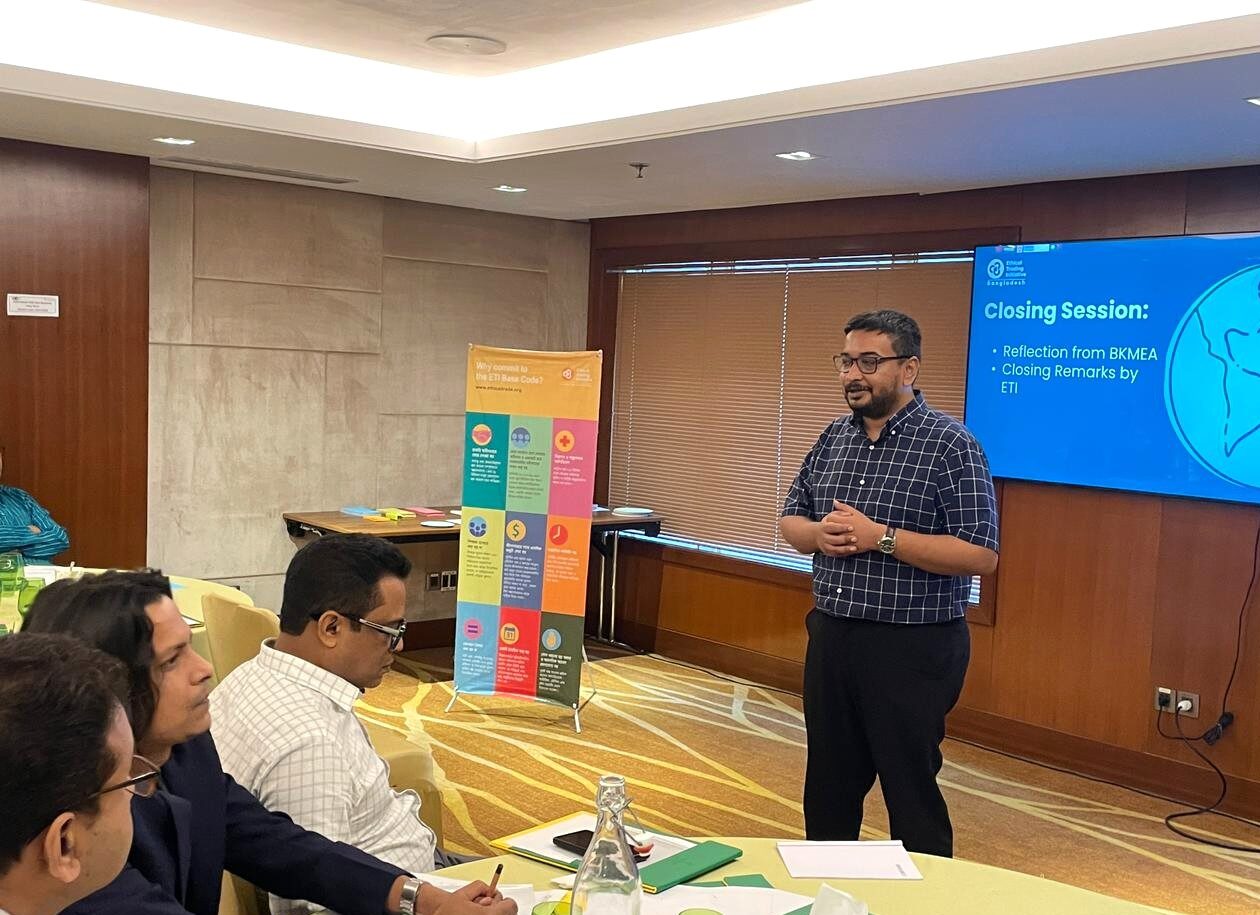
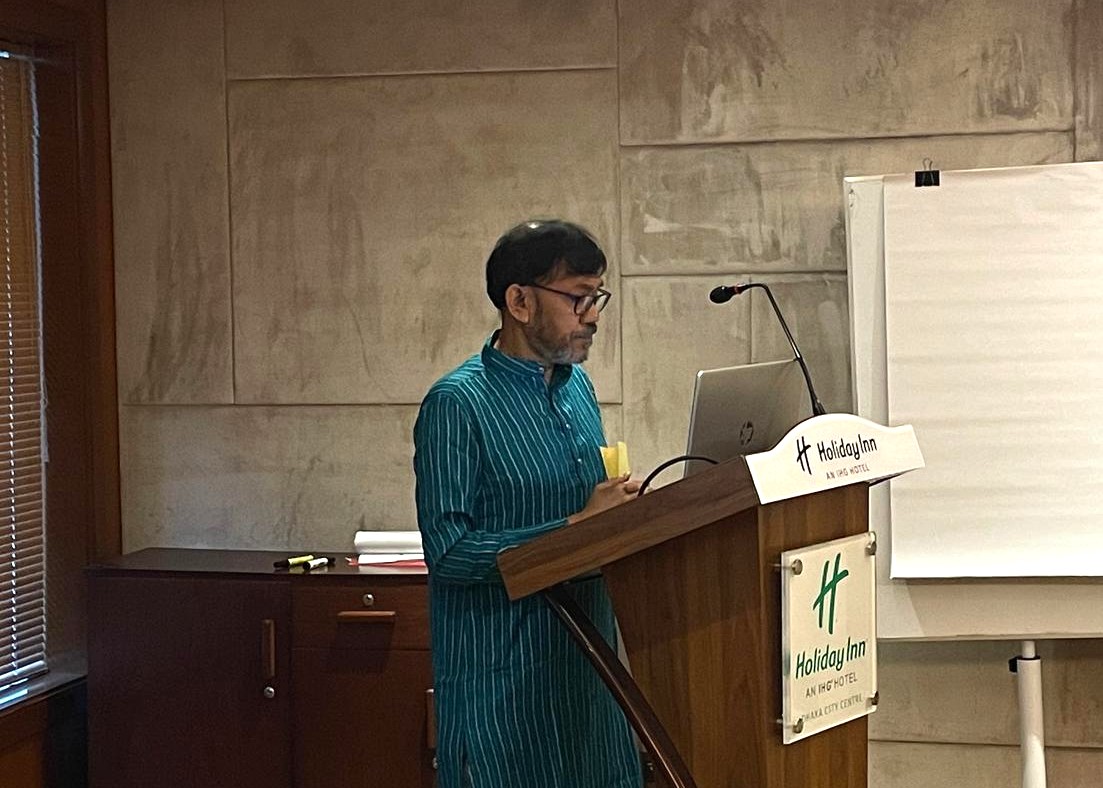
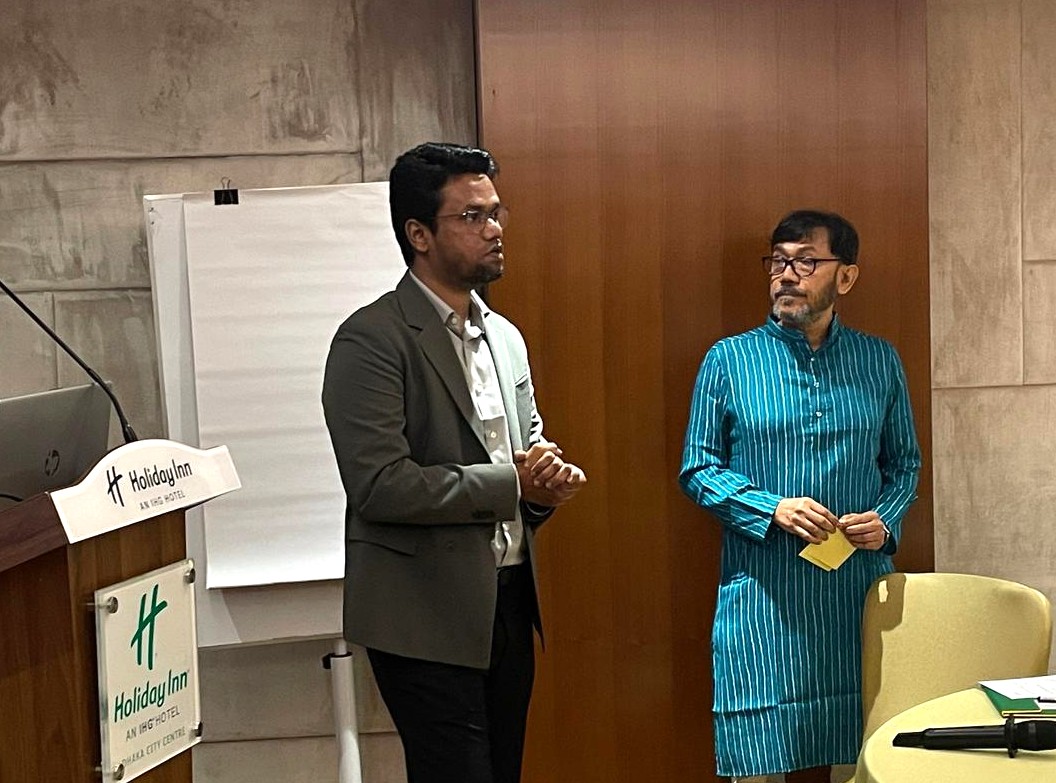
Minhazul Hoque, Director at the BKMEA, opened the session, emphasising the immediacy for Bangladesh’s ready-made garment RMG sector to prepare for a renewable energy transition. He highlighted that with emerging global regulations such as mandatory Human Rights and Environmental Due Diligence (HREDD) and the Corporate Sustainability Due Diligence Directive (CSDDD), along with Bangladesh’s upcoming LDC graduation in 2026 and the subsequent loss of GSP trade benefits, proactive preparation has become more crucial than ever.
Since 2022, when ETI Bangladesh first began working on the intersectionality between climate change and worker rights in the RMG industry, they have been collaborating with various key industry actors through a series of consultations and dialogues on issues pertaining to just and inclusive energy transitions. Under this premise, to build on experiential learning, ETI Bangladesh convened this workshop with representatives from the BKMEA.
The consultation workshop was framed to collectively review and identify existing best practices, identify key industry challenges in decarbonising and transitioning to renewable energy, and scope potential solutions. It also aimed to explore how different stakeholder groups can play effective roles in addressing these challenges and common areas for collective action – thereby scaling a just and inclusive green transition, including decarbonisation and the transition to renewable energy, within the RMG sector.
The BKMEA reflected on their own organisational capacities including their ongoing work and probable role in facilitating such a necessary transition in RMG. Representatives from the BKMEA highlighted the BKMEA's contributory role in expediting the overall process. Here, building the BKMEA's own knowledge base as well as that of the supply chain is essential, the BKMEA noted.
In line with this sentiment, the BKMEA shared their ongoing work in developing an ESG roadmap and digital dashboard to help its member knitwear factories track and improve performance across environmental, social, and governance indicators. BKMEA believes organisations such as ETI can aid in amplifying the overall supply chain’s levels of awareness and technical capacities, including those of associations and factories.
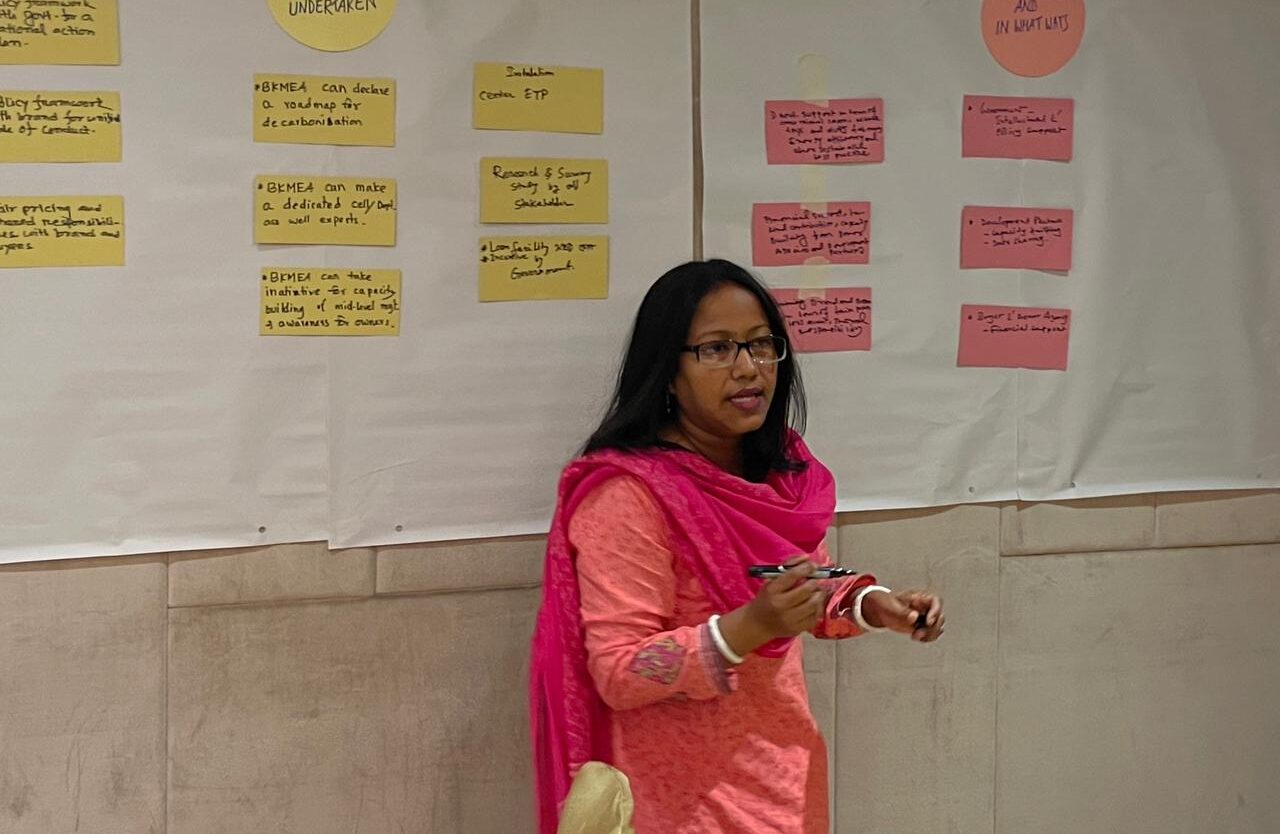
The major focus of the event was a group work session. BKMEA representatives collectively identified existing challenges and outlined their expectations from key stakeholders to accelerate the industry’s transition towards renewable energy and decarbonisation.
The workshop concluded with a set of recommendations from BKMEA representatives for necessary practices or policies for brands, associations, government agencies, and CSOs.
This event is part of ETI Bangladesh’s ongoing sectoral project titled "Promoting Just Transition & Environmental Sustainability in the Bangladesh RMG Industry”. A core focus of the project is to work exclusively with key industry actors, including business associations, to formulate recommendations for necessary policies and practices within the industry – thereby driving commitments for shared responsibility among key sectoral actors to facilitate a renewable energy transition in Bangladesh RMG.