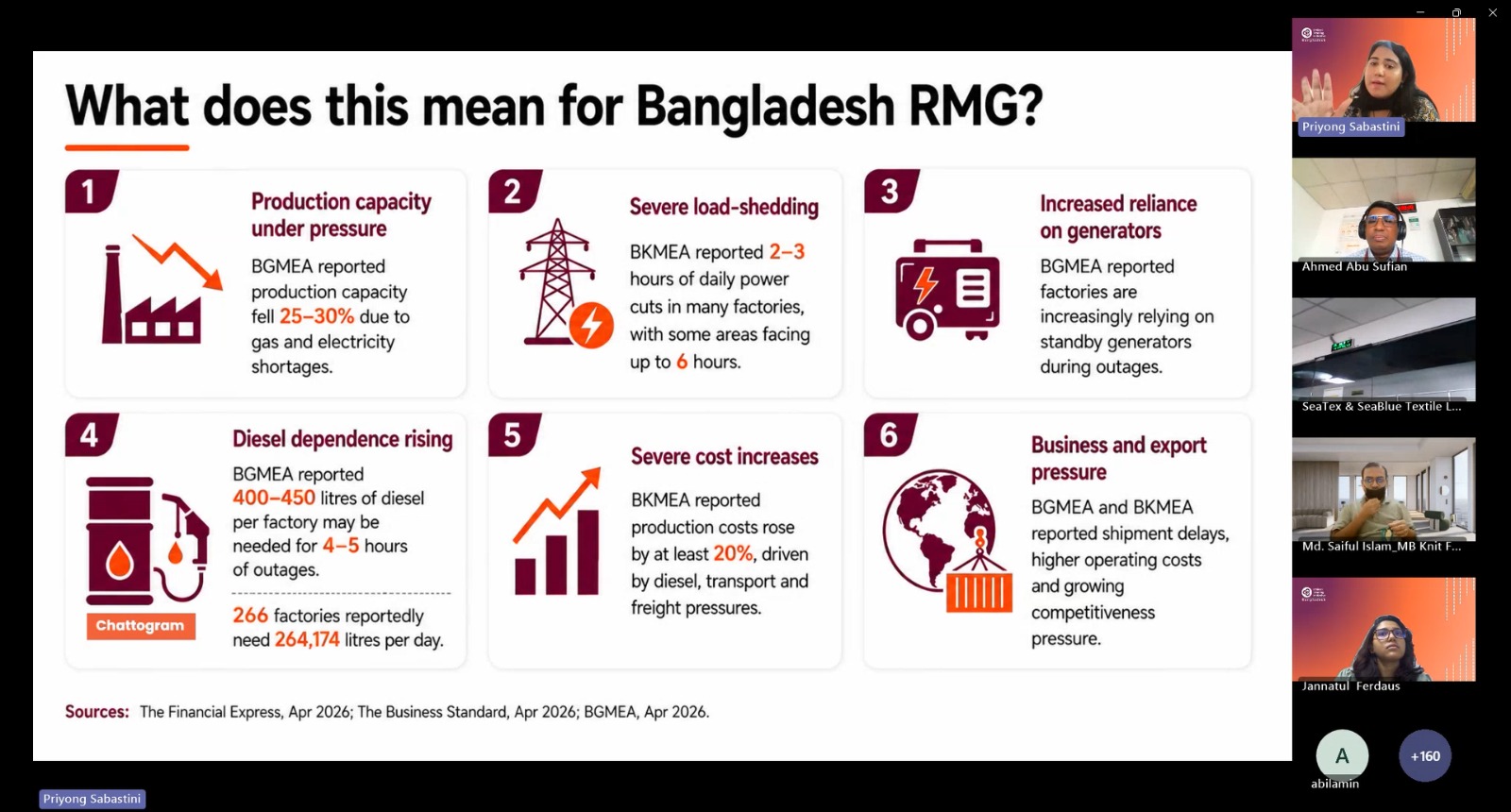
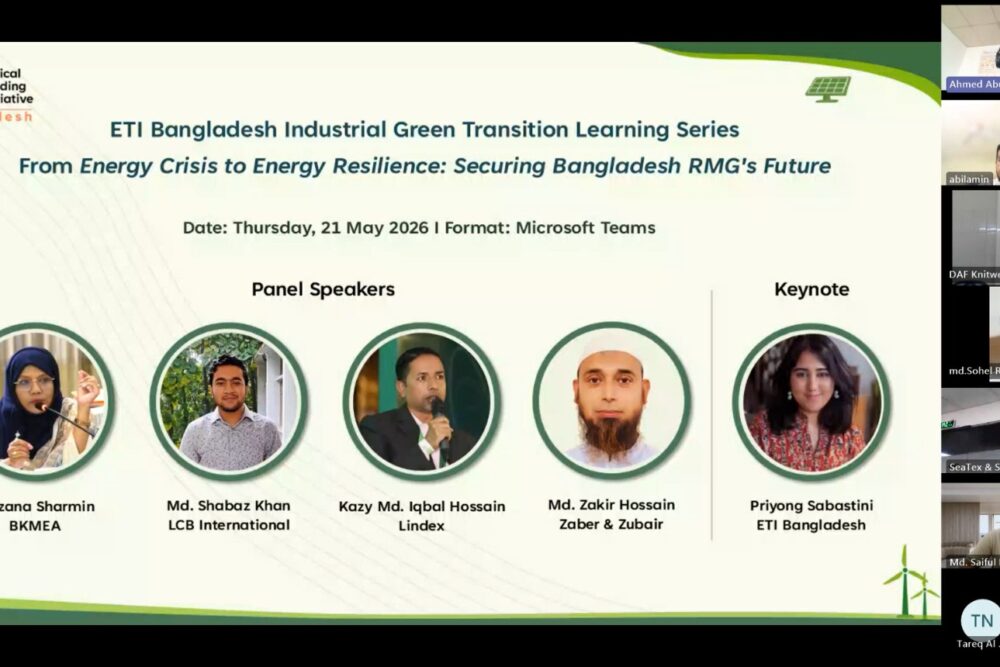
On 21st May 2026, industry representatives warned that energy insecurity is no longer a temporary disruption for Bangladesh’s ready-made garment (RMG) sector but a structural business risk affecting factory operations, production continuity, cost competitiveness and long-term viability.
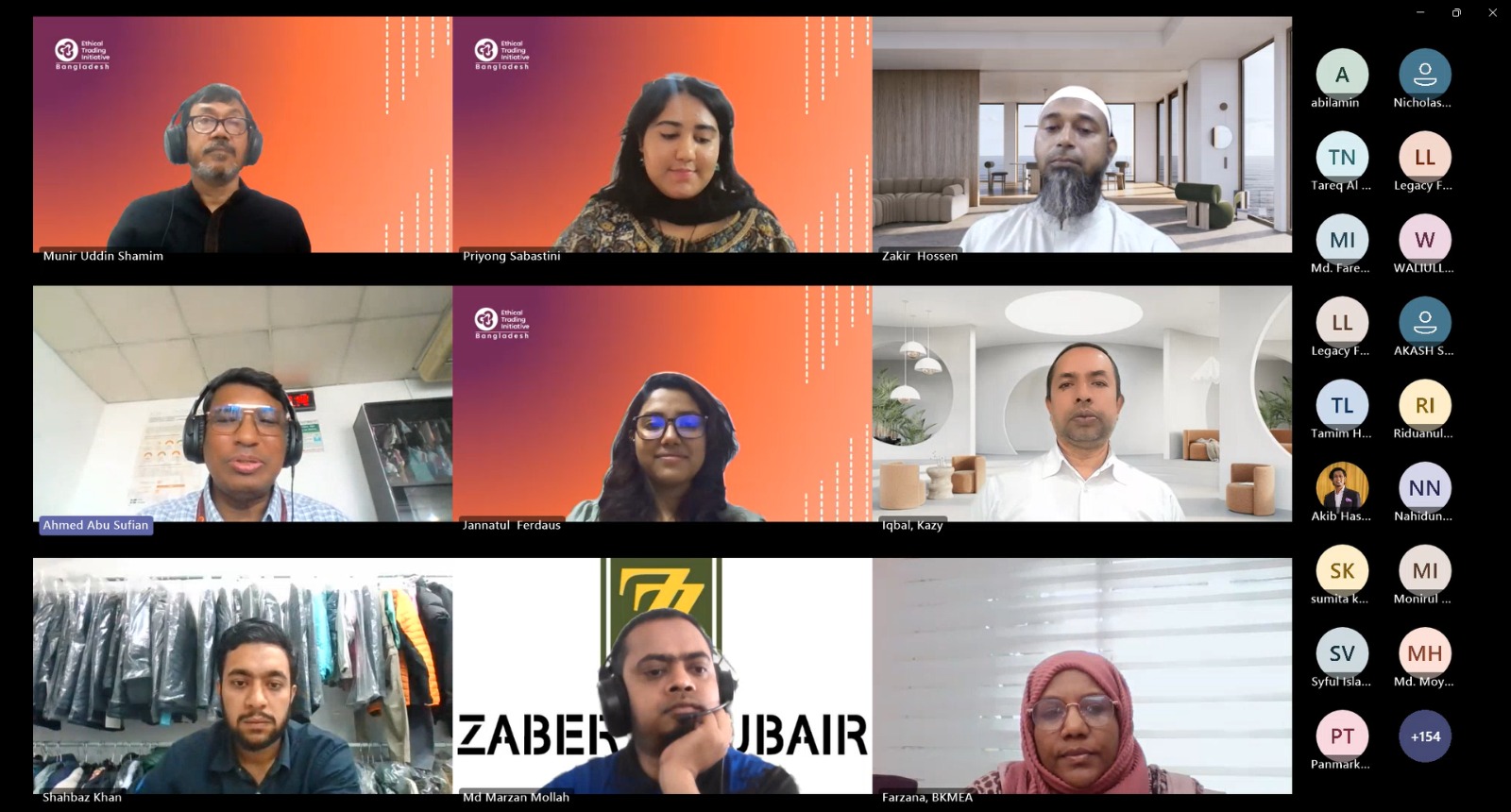
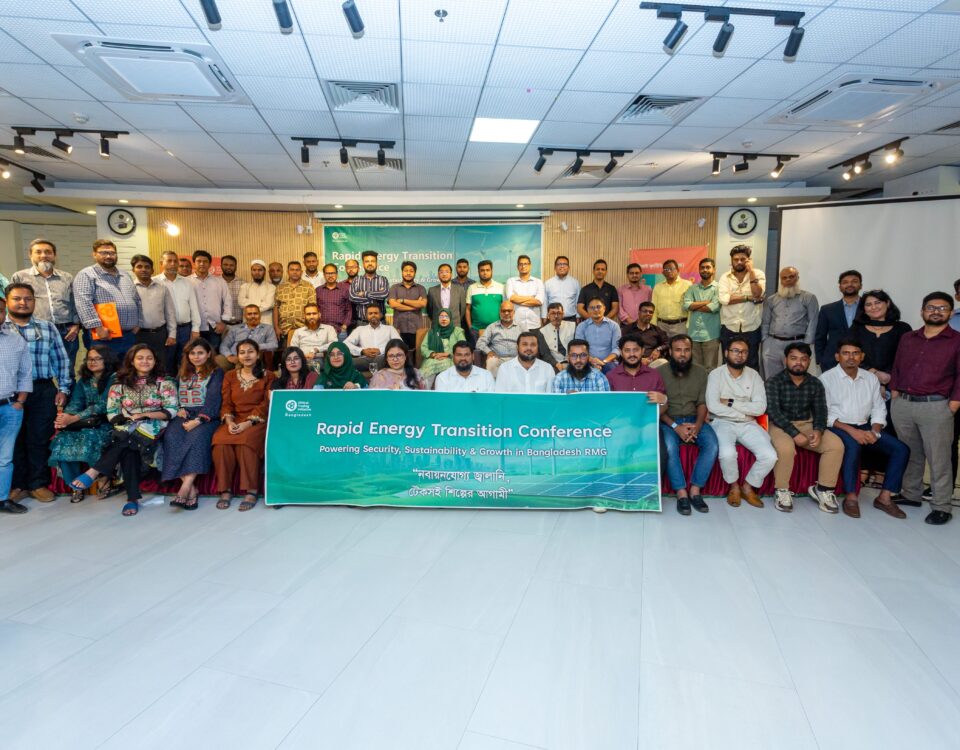
The discussion took place at the first session of ETI Bangladesh’s Industrial Green Transition Learning Series, titled “From Energy Crisis to Energy Resilience: Securing Bangladesh RMG’s Future.” The webinar brought together more than 200 participants, including RMG manufacturers, business associations, international brands, NGOs and civil society organisations.
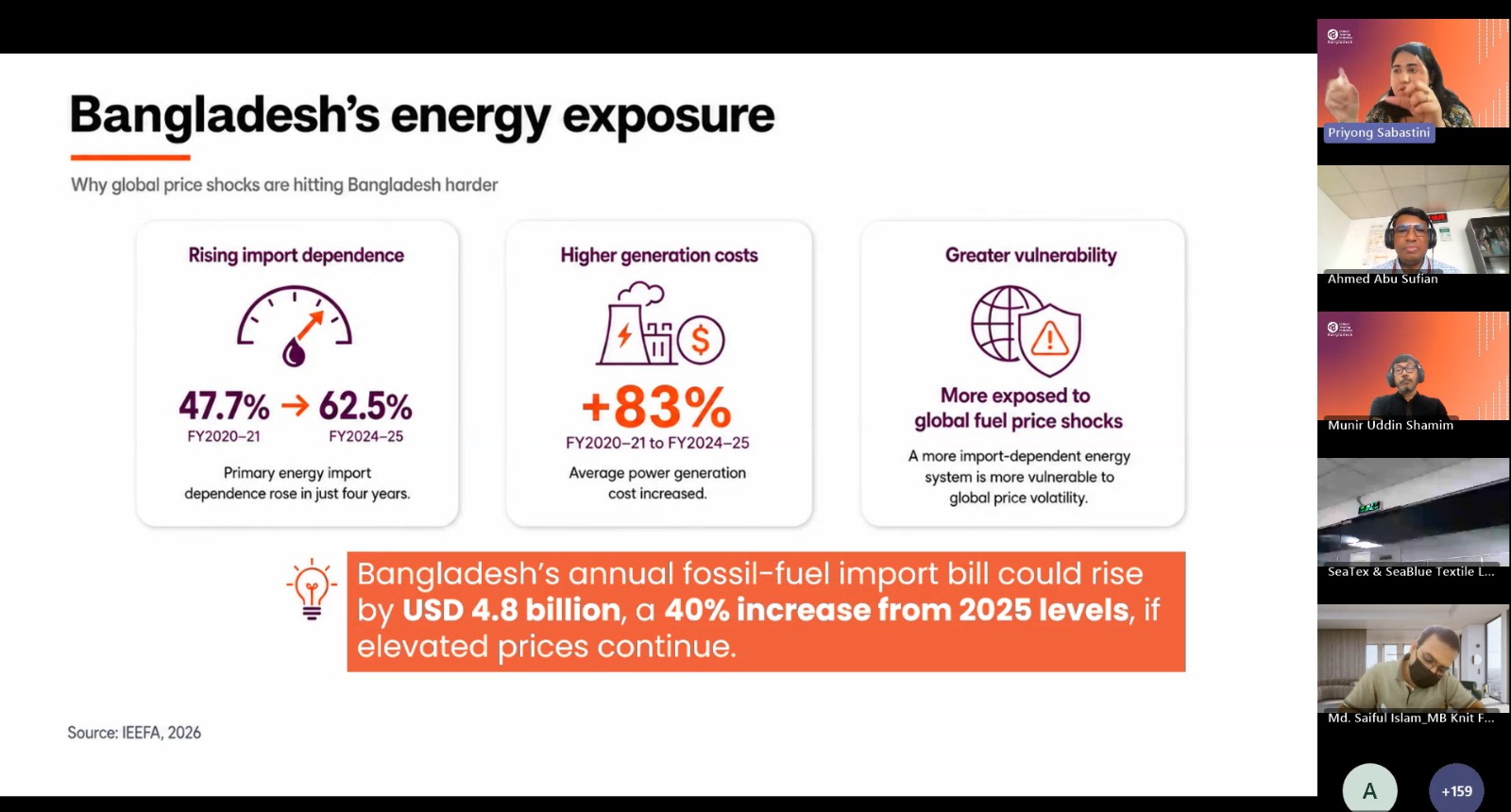
In her keynote speech, ETI Programme Officer Priyong Sabastini linked the current energy crisis with earlier global fuel shocks, including the Russia–Ukraine war. It stressed that global energy infrastructures do not recover overnight even when conflicts ease, and that Bangladesh’s continued reliance on imported fossil fuels leaves export-oriented industries exposed to repeated cost and supply shocks.
Reflecting on the keynote, speakers said this should be treated as a clear lesson for the RMG sector: renewable energy transition and energy efficiency are now part of business resilience, not only sustainability planning.
The session focused on how ongoing global fossil fuel instability and the Middle East energy crisis are already affecting factory operations and supply-chain resilience in Bangladesh. Speakers noted that while the current energy crisis is creating serious pressure for manufacturers, it is also opening a critical window for the sector to rethink its long-term energy strategy.
A key message from the session was that Bangladesh’s RMG sector must accelerate renewable energy transition, energy-efficiency improvements and stronger sustainability integration across supply chains. Speakers stressed that energy resilience should now be treated as a core business priority, not only as a sustainability or compliance issue.
On global competitiveness, demand for reduced carbon emissions across supply chains and, Bangladesh’s leverage as a source of “cheap labour,” Kazy Md. Iqbal Hossain, South Asia Sustainability Manager at Lindex HK remarked:
“We as brands are buying to sell, but if no one buys our products, then what is the point? Bangladesh’s competitiveness cannot rely only on low-cost production alone. If products cannot remain commercially viable in a changing global market, the business case becomes difficult for both suppliers and buyers. Energy efficiency and renewable energy are therefore becoming increasingly important for supply-chain resilience. While rooftop solar may not be feasible for every factory, the sector needs to explore a wider mix of solutions, including off-site renewable energy, merchant power purchase models, wind and other emerging technologies. The key is to move towards greater energy self-sufficiency.”
Farzana Sharmin, Joint Secretary, Compliance Cell, BKMEA; Md. Zakir Hossen, Deputy General Manager, Sustainability, Zaber & Zubair Fabrics Ltd.; and Md. Shabaz Khan, Environment Councillor, LCB International, shared perspectives on the changing energy context, factory-level responses, buyer expectations, and the support needed to move from crisis response to long-term resilience.
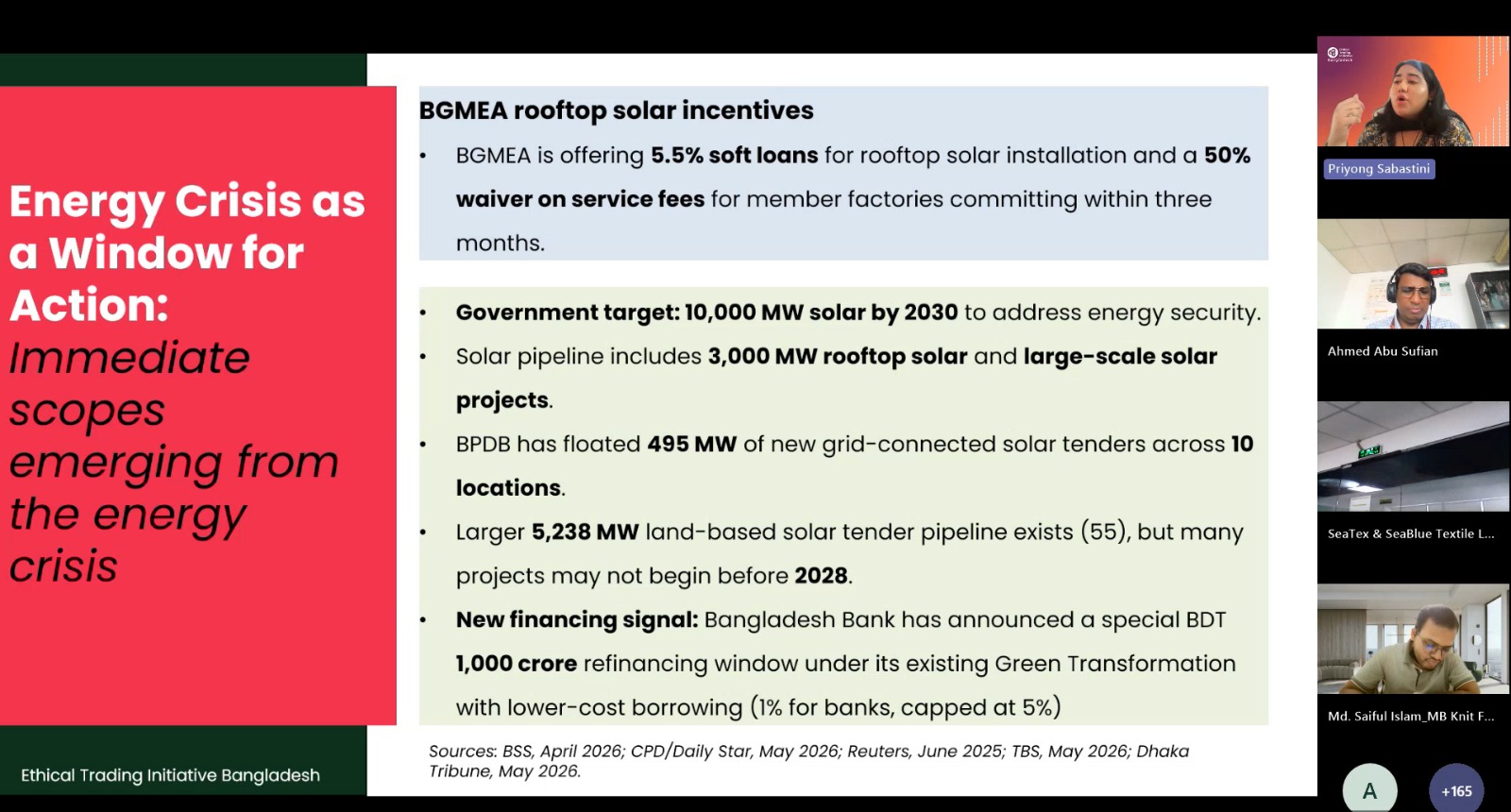
The discussion highlighted several urgent areas for action. These included improving factory-level energy data, investing in energy efficiency, exploring renewable energy options where feasible, strengthening technical capacity, and creating more accessible green finance pathways for manufacturers.
Special attention was given to SMEs and mid-tier factories, which often face greater challenges in accessing finance, technical support and energy-efficient technologies. Farzana Sharmin from BKMEA noted that without targeted support, these factories may fall further behind in the transition.
The session also discussed growing pressure from global regulations related to carbon emissions and sustainability compliance. Speakers observed that Bangladesh’s competitiveness could be affected if the sector does not prepare early for changing brand expectations and emerging regulatory requirements in global markets.
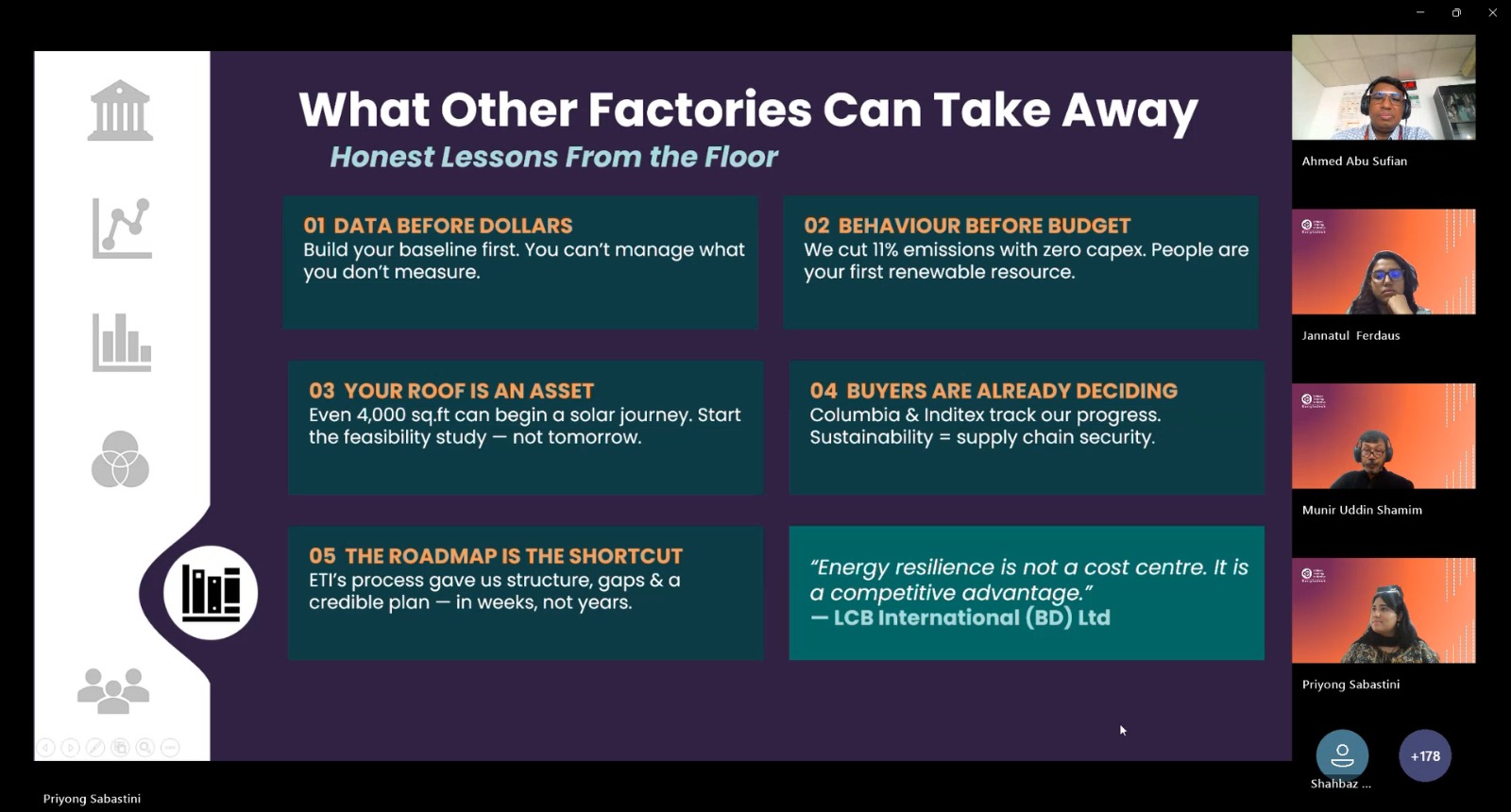
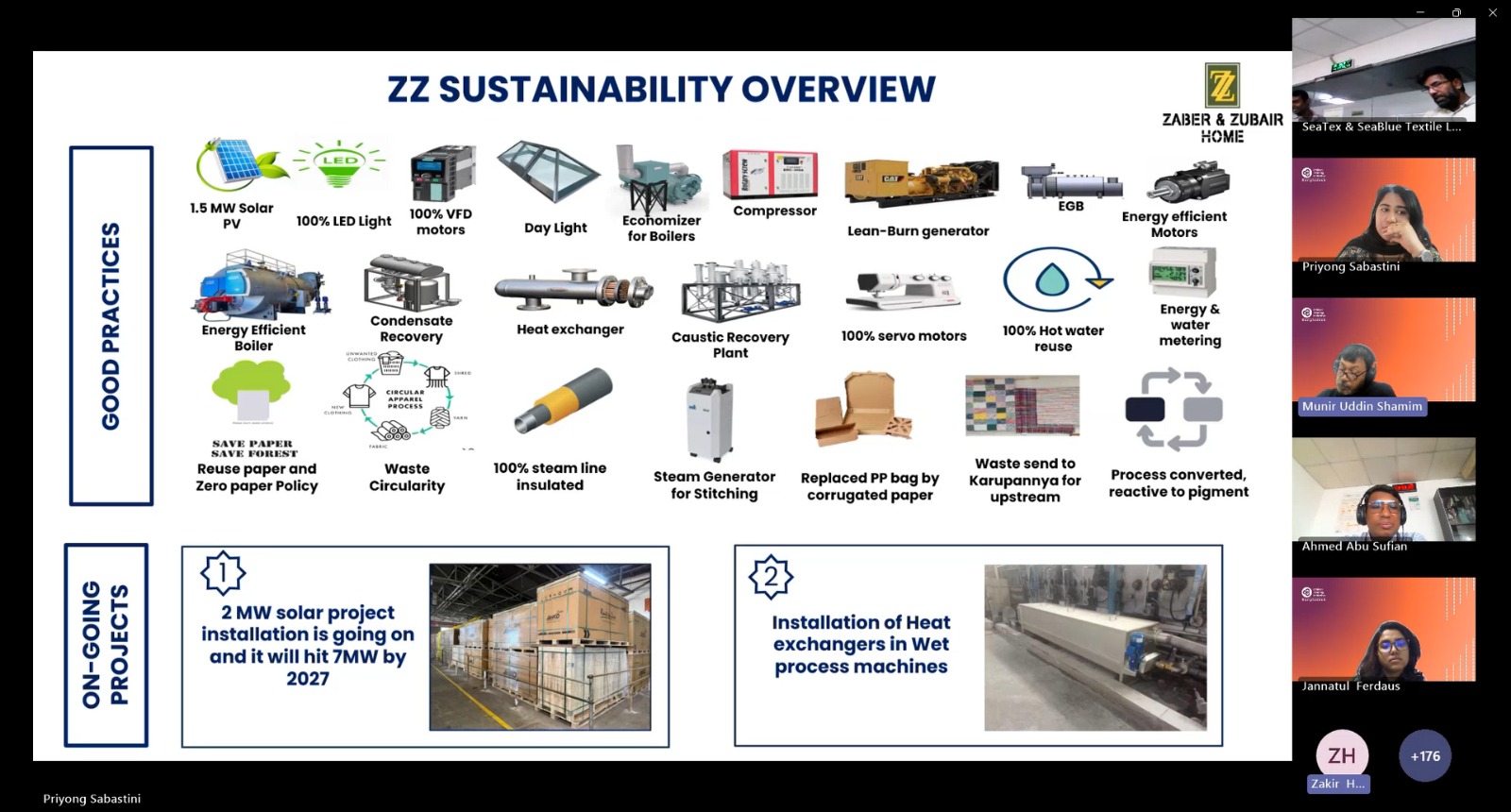
Zakir Hossen and Md. Shabaz Khan shared practical examples of energy-efficiency measures, renewable energy planning, roadmap development and internal sustainability efforts from Zaber and Zubair Fabrics and LCB International, respectively. Their experiences showed that factories do not need to wait for perfect conditions to begin action; progress can start with better monitoring, efficiency improvements, feasibility assessment and, internal energy management and planning.
Speakers concluded that the energy transition is not only about technology or infrastructure. It also requires behavioural change, better data use, stronger internal coordination and a long-term sustainability mindset across the sector.
Munir Uddin Shamim, Director at ETI Bangladesh noted that the learning series will continue as a collaborative platform for industry stakeholders to discuss practical issues around renewable energy, energy efficiency, decarbonisation, climate resilience and environmental sustainability.
The session ended with a call for coordinated action among manufacturers, brands, associations, financial institutions, NGOs and development partners to support Bangladesh’s RMG sector in moving from energy crisis response to long-term energy resilience.