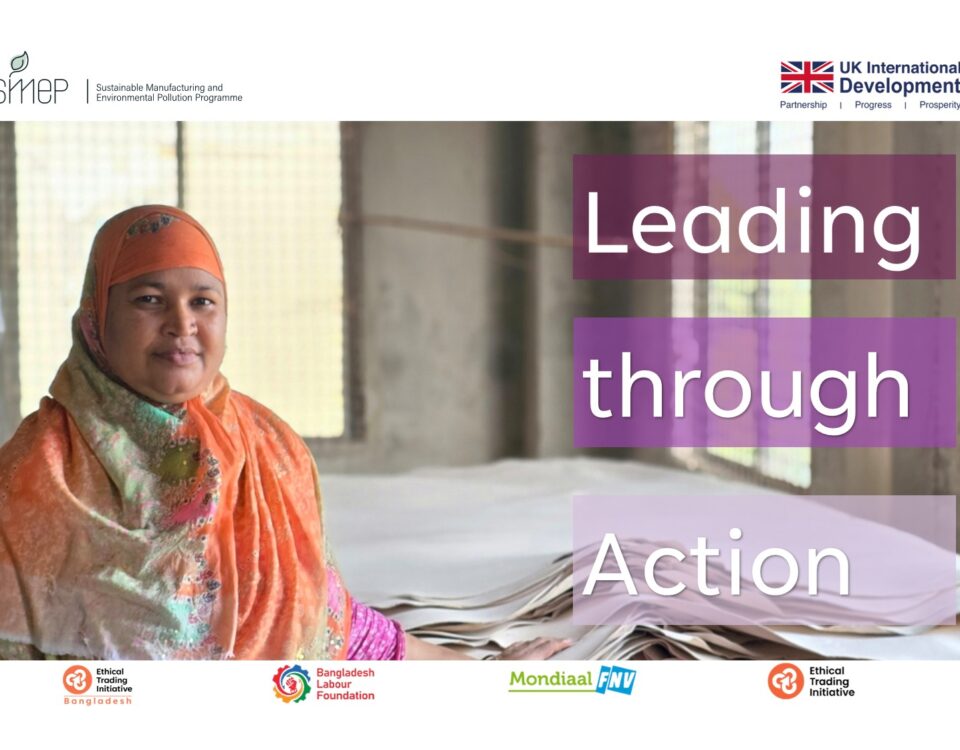
Bangladesh’s tannery sector stands as one of the country’s most promising export-oriented industries, contributing significantly to economic growth and employment generation. With a large workforce and strong production capacity, the sector holds real potential to expand its footprint in international markets. However, this potential remains incomplete when workforce inclusion is left unaddressed. Women make up a small share of workers in the Savar Tannery Estate, and most are placed in part time and non-permanent roles. Only 25.4% of women workers hold a permanent contract, compared to 48% of men, and just two of the tannery executive committee’s 25 members are women. As global buyers increasingly expect responsible and inclusive production practices, the need for stronger gender inclusion within the sector has become more urgent than ever. The Tannery Workers Union (TWU) has represented workers and formed a dedicated women’s committee to give women a platform for organising and leadership. Yet structural barriers, limited formal grievance systems, and deeply rooted cultural norms continue to hinder women’s full participation. In this context, the project “Improving Environmental and Social Conditions in the Savar Tannery Estate” under the SMEP programme works with workers and institutions to strengthen worker capacity, promote gender inclusion, and support the establishment of formal mechanisms for addressing gender related grievances. This case study explores how sustained training, worker advocacy, and institutional support can reshape workplace culture, using the journey of one worker, Nasrin Begum*, as a lens to understand broader change within the sector.
*Pseudonym used to maintain privacy.