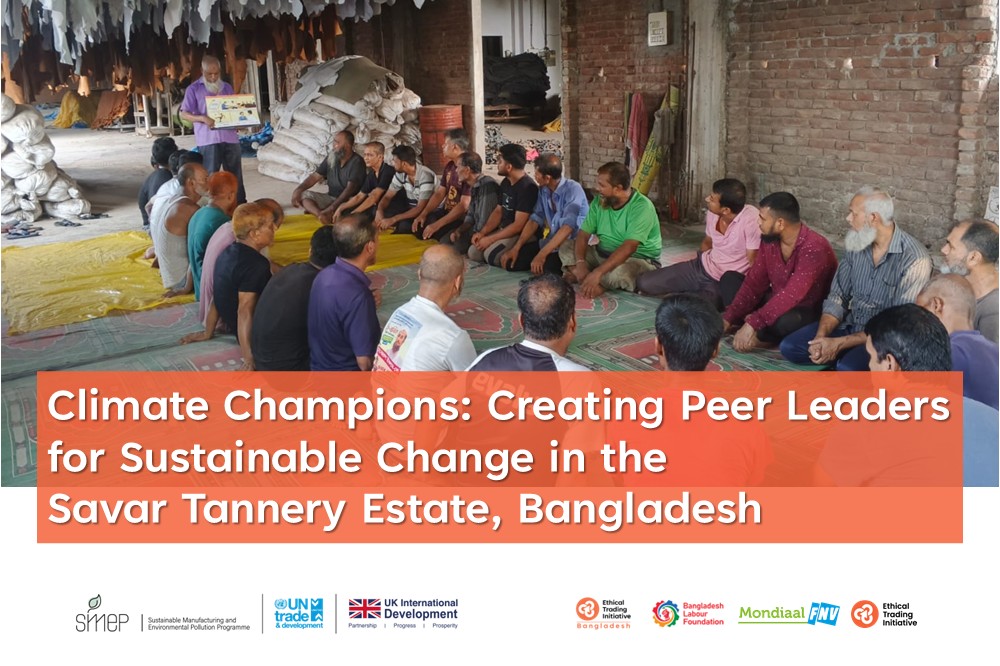
Bangladesh’s leather sector relocated to the Savar Tannery Estate in 2017, seeking to move beyond the environmental pollution, weak regulatory oversight, and poor labour conditions associated with the earlier Hazaribagh cluster. A shared infrastructure, including a common effluent treatment plant, was established to help factories meet national regulations and international standards, with alignment to the Leather Working Group (LWG) framework serving as a key benchmark for environmental and social performance and access to international markets.
This case study uses an Outcome Harvesting approach to identify observable changes in systems, practices, and behaviours across selected tanneries within the estate, rather than assessing compliance against predefined indicators. Factories** are examined across three stages of maturity: Early, where procedures remain inconsistent and only partly documented; Moderate, where systems are more structured, with stronger documentation, monitoring, and gender responsive practices; and Advanced, where certification aligned systems, buyer requirements, and continuous improvement are embedded in daily operations. Across these stages, the case study traces how factory practice is evolving in effluent treatment, waste management, chemical handling, energy and water use, worker documentation, and social dialogue mechanisms such as Anti-Harassment Committees and grievance systems. Together, these findings show how factories across the estate are moving, at different speeds, from compliance on paper towards systems that are understood, used, and sustained by workers and management alike.
**Factory names are anonymized to maintain privacy.